

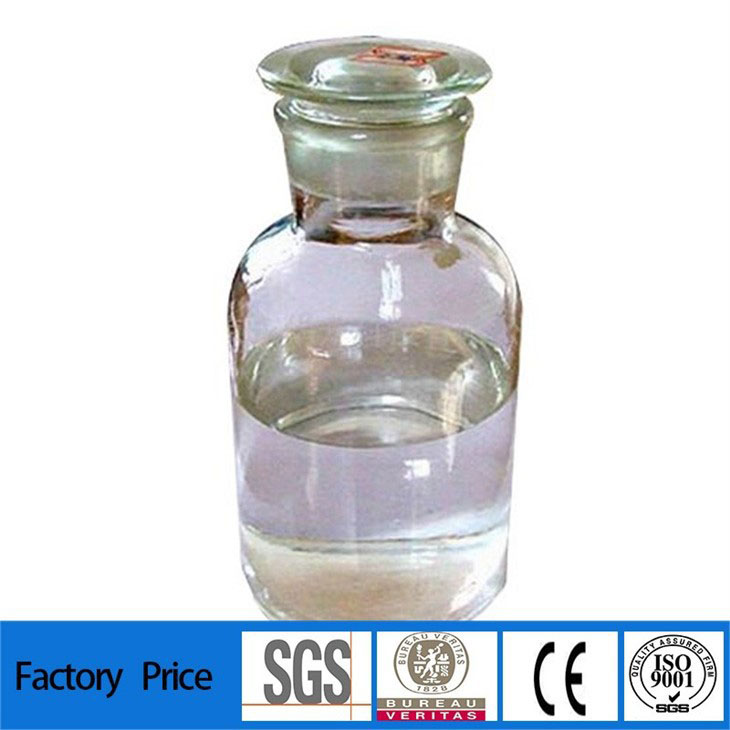



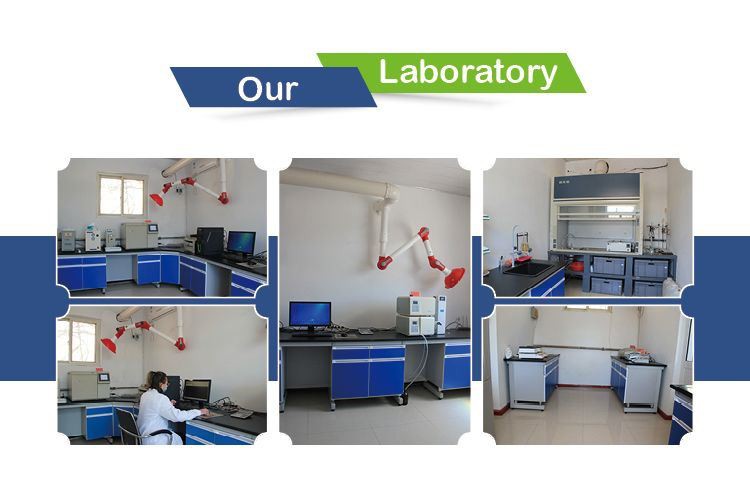
JAMMARK INTERNATIONAL TRADINGE(ZIBO) CO., LTD. is one of the most professional manufacturers and suppliers of isooctyl 3-mercaptopropionate in China. If you're going to buy high quality isooctyl 3-mercaptopropionate made in China, welcome to get more information from our factory. For price consultation, contact us.
Product uses
One of the most common uses of Isooctyl 3-Mercaptopropionate is as a fuel additive.
It is added to diesel to increase the cetane number, which is an indicator of fuel
combustion quality. This makes fuel combustion more efficient and smooth, reducing
engine noise and emissions. In addition, isobutyl nitrate is also used as a performance
enhancer for racing fuel.
Product Specification
Item |
Specification |
| Appearance | Colorless Liquid |
| Place of Origin | China |
| Hazardous components | Isooctyl 3-Mercaptopropionate |
| MF | C8H17NO3 |
| EINECS No. | 248-363-6 |
| Purity |
≥99.1%
|
Product package
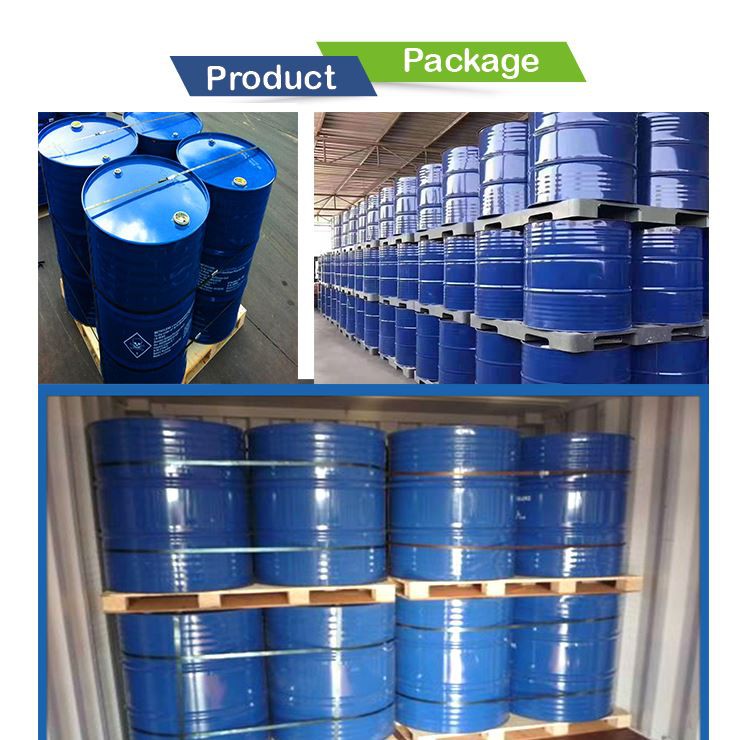
190 kg/barrel or according to customer requirements.
Another important application of Isooctyl 3-Mercaptopropionate is as a vasodilator in the
medical industry. It is used to treat heart disease, especially angina, a chest pain caused
by insufficient blood supply to the heart. The function of isobutyl nitrate is to relax the smooth
muscle on the blood vessel wall, making it wider and improving blood flow.
If the role of the cetane number improver is simply to transfer heat to the working system,
then the increase in the cetane number exhibited by the fuel should be proportional to
the amount of the added improver. In fact, as the concentration of the improver increases,
the increase in the cetane number decreases.
Moreover, some calculations prove that it is incomplete to explain the mechanism of
action of cetane number improvers only by heat. In the 1940s and 1950s,
Isooctyl 3-Mercaptopropionate was found through research that alkyl nitrates and
peroxides are very effective improvers.
Nitrates and peroxides can increase the cetane number, and this effect is closely related
to the number of free radicals obtained from the thermal decomposition of the improver
during the ignition delay period. Experiments have proven that free radicals play a very
important role in improving combustion performance during the ignition delay period. This
is the so - called "free radical" mechanism.
Cetane number improvers are some compounds with relatively poor thermal stability.
They can decompose to generate active free radicals when heated at low temperatures.
These free radicals participate in the oxidation and decomposition reactions of diesel.
Centered around these free radicals, an oxidative chain reaction is initiated, which greatly
reduces the auto - ignition activation energy of diesel and improves the ignition performance
of the fuel.
After adding a cetane number improver to diesel, due to the participation of free radicals,
the fuel can undergo an oxidation reaction even at a relatively low temperature, and the
reaction rate is accelerated. This shortens the combustion ignition delay period and
apparently increases the cetane number of the fuel. Now, taking nitrates,nitrites and
peroxides as examples, the mechanism of action of cetane number improvers is
illustrated as follows:
Nitrates, Nitrites RONOx → RO· + NOx Peroxides ROOR → 2RO·
(Thermal Decomposition) ROR'· + Aldehyde or Ketone (Cleavage) R'· + OR'OO.
(Addition Reaction with O₂; Promote Free - radical Chain Reaction) The following are
the reaction mechanisms of several compounds decomposing to generate alkyl radicals.
Azo Compounds RNNR' → R'· + R· + N₂ Aldehydes RCH RC. RC. → R. + CO
Ketones RCR RC. + R'. RC. → R. + CO ROOCCOOR → 2R. + 2CO₂ Other studies
have shown that the mechanisms of action of nitrates and peroxides are not exactly
the same. Both can improve the ignition performance of ordinary diesel
Isooctyl 3-Mercaptopropionate. However, for fuels with low sulfur (S) and low nitrogen (N),
adding nitrates can shorten the ignition delay period, while adding peroxides hardly changes
the cetane number of the fuel.
This is mainly because peroxides mainly make the combustion more complete and
improve the engine efficiency by inhibiting the reaction termination effect of the
inhibitors in the fuel, while nitrates do not work in this way. Since the content of
inhibitors in low - S and low - N fuels is relatively low, the effect of peroxydicarbonate
compounds is not good.
Hot Tags: isooctyl 3-mercaptopropionate, China, suppliers, manufacturers, factory, buy, price, made in China, Pyromellitic Dianhydride Crude, hydroxyethyl acrylate methoxyethyl acrylate copolymer, maleic anhydride structure, sodium formate solubility, pentaerythritol l slichkeit, polyether polyol examples


