

I. Core Chemical Role: Constructing the PI backbone and imide ring
1. Polycondensation into polyamic acid (PAA)
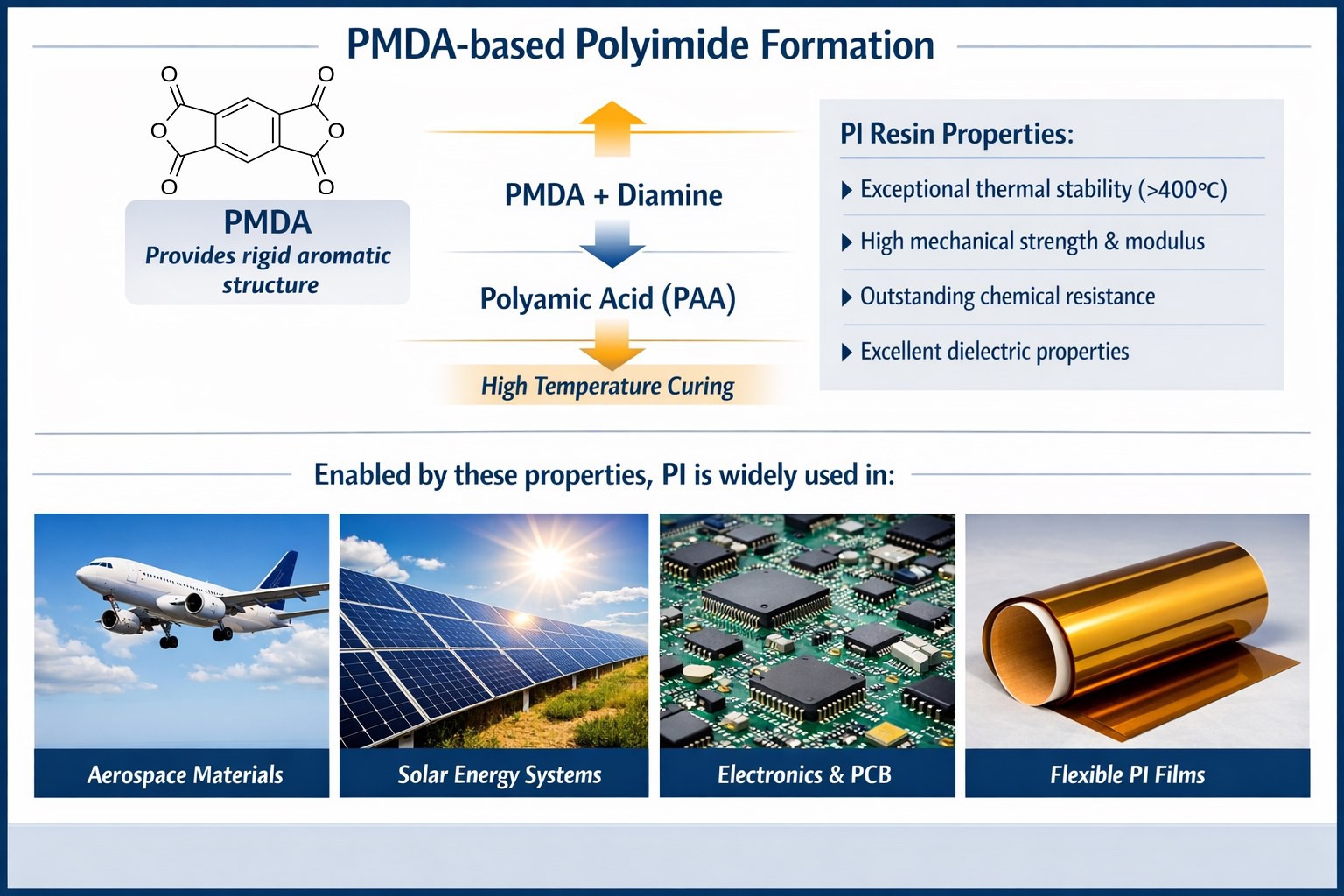
The four anhydride groups of PMDA undergo nucleophilic addition-elimination reactions with the amino groups of aromatic diamines (such as ODA) to generate high molecular weight polyamic acid (PAA) in polar solvents. This is the first step in the synthesis of PI prepolymer.
2. Dehydration cyclization to form an imide ring
PAA undergoes thermal/chemical imidization, followed by dehydration and ring closure to form a five-membered imide ring, which is the core chemical structural basis for the excellent comprehensive properties of PI resin.
n PMDA + n ODA → (PAA) → (PI) + 2n H₂O
II. Structural function: endowing PI with ultra-high rigidity and regularity
- PMDA has a symmetrical, rigid planar structure with four anhydride groups on the benzene ring arranged in a highly regular pattern, resulting in extremely rigid PI backbone and a tightly packed molecular chain.
- The backbone forms strong π-π packing and intermolecular hydrogen bonds, significantly enhancing intermolecular forces and making PI difficult to melt and dissolve.
III. The properties of pyromellitic dianhydride play a decisive role
1. Extreme heat resistance
- With a thermal decomposition temperature of 500–600℃, a glass transition temperature (Tg) >300℃, and a long-term service temperature of 300℃+, it is one of the polymers with the highest heat resistance.
- The conjugated structure of the imide ring combined with the rigid backbone allows PI to maintain structural stability at high temperatures.
2. Excellent mechanical properties
- High modulus and high strength: tensile strength 170–400 MPa, modulus 3–5 GPa, combining rigidity and toughness.
- Wear-resistant and creep-resistant, suitable for high-temperature structural components and thin-film applications.
3. Excellent electrical insulation
With a dielectric constant of **<3.5**, low dielectric loss, high volume resistivity, and resistance to corona and breakdown, it is the preferred choice for high-frequency/high-voltage electronic insulation.
4. Chemical and environmental stability
It is resistant to acids, alkalis, organic solvents, radiation, and damp heat, and has excellent dimensional stability, making it suitable for harsh environments such as aerospace and electronics.
IV. Technological Processes and Applications
- As a standard dianhydride monomer, PMDA can be combined with various diamines (ODA, MDA, etc.) to customize different PI types (homogeneous polyimide, copolymer), suitable for films, fibers, composites, adhesives, etc.
- High-purity PMDA (≥99.5%) is a necessary condition for preparing high-quality PI films (such as Kapton), directly affecting the uniformity and performance stability of the finished product.
In summary, pyromellitic dianhydride (PMDA) is the core monomer for polyimide (PI) resins. It reacts with diamines to form polyamic acid (PAA), which is then converted into PI resin through high-temperature curing and imidization. As a key building block, PMDA provides PI with outstanding thermal stability, high mechanical strength, excellent electrical insulation, and superior chemical resistance.
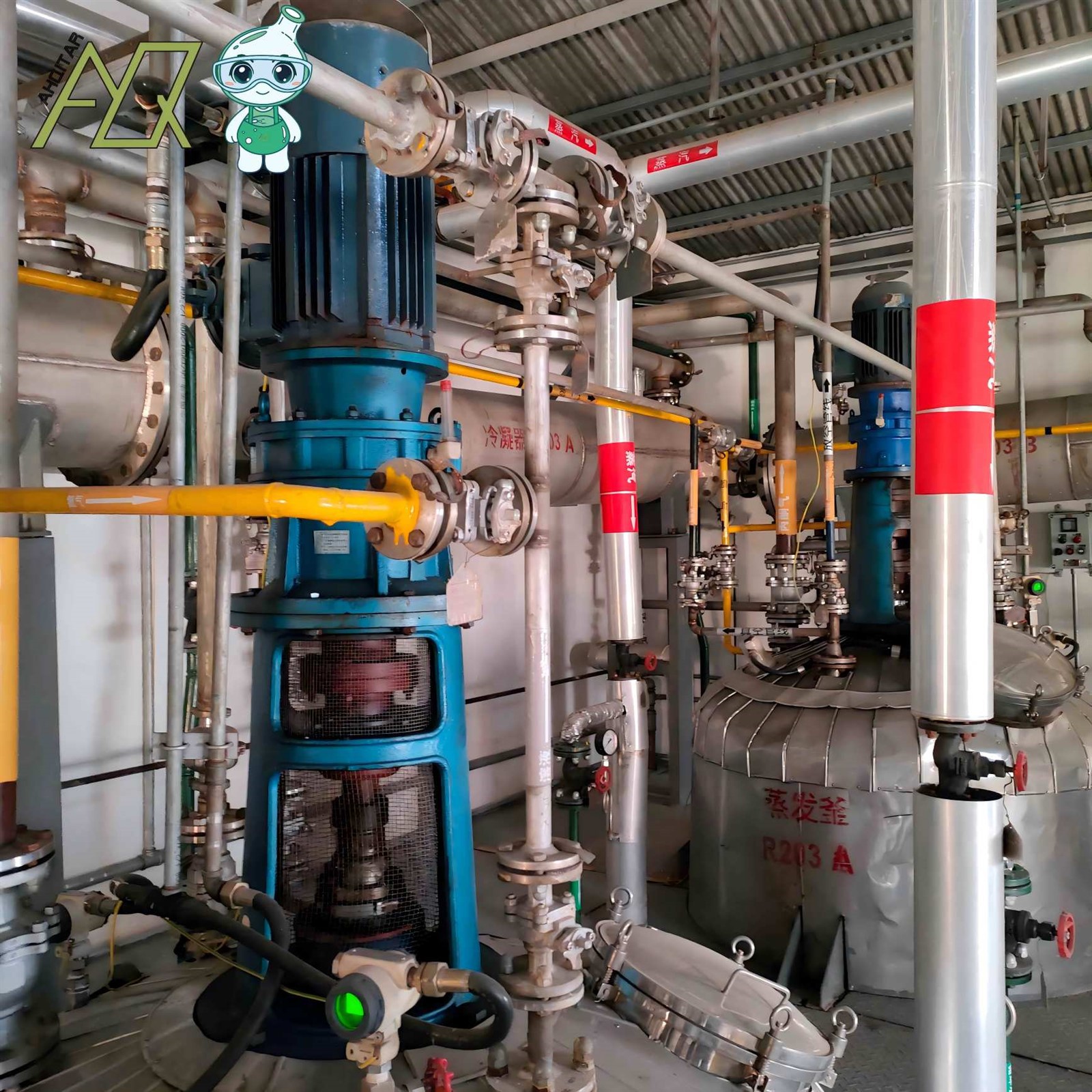
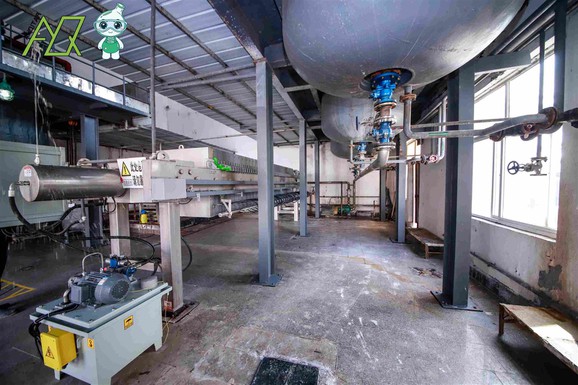
JAMMARK INTERNATIONAL TRADINGE has been deeply involved in the export of pyromellitic dianhydride (PMDA) for many years. With its refining process of six-stage filtration and professional distillation, it deeply removes residual impurities, metal ions, and light components, resulting in higher product purity and stronger batch stability. This fully meets the stringent requirements of resins, adhesives, and other fields for PMDA, providing a stable and reliable raw material guarantee for the production of high-quality PI resins.


