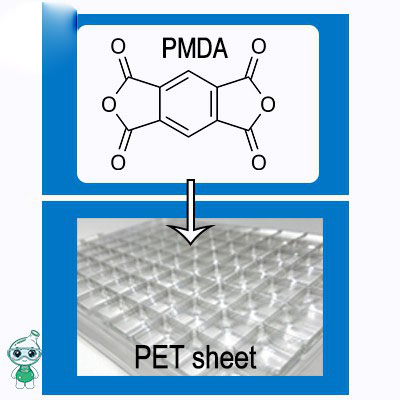
1. Why recycled PET needs chain extension?
Because PET will experience: during recycling and reprocessing:
Processes such as high-temperature melting and hydrolysis reactions.
These processes result in:
- molecular weight decrease
- Intrinsic viscosity (IV) decreases
- Melt strength weakens
- Decreased impact resistance
- and other questions
Especially in the thermoforming and vacuum formed sheet industries, insufficient melt strength can directly impact finished product quality and yield.
2. The mechanism of action of PMDA as a chain extender
Pyromellitic dianhydride has high reactivity.
During the PET melting process, PMDA can interact with the end of the PET molecular chain:
- Hydroxyl (–OH)
- Carboxyl (–COOH)
- Reactions occur to achieve "bridging" connections between molecular chains.
And then improve:
- increase molecular weight
- Increase intrinsic viscosity (IV value)
- Form a lightly branched structure
- Enhance melt elasticity
Therefore, through this molecular structure reconstruction, the processing performance of recycled PET can be significantly improved.
3. Advantages in thermoforming and sheet processing
After taking an appropriate amount of PMDA, you can:
- Improve sheet forming stability
- Reduce collapse and deformation
- Improve the mechanical strength of finished products
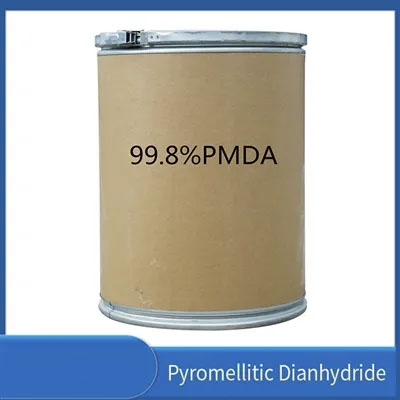
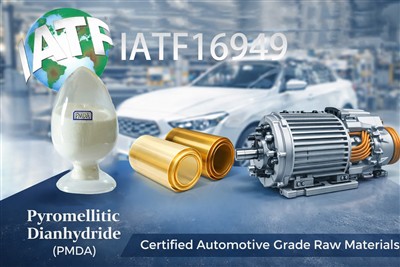
As a manufacturer of pyromellitic dianhydride, we are proud to provide stable quality PMDA products for the fields of recycled PET and high-performance materials, and to help customers improve processing stability and material performance. We also welcome everyone to contact us for more information about PMDA.