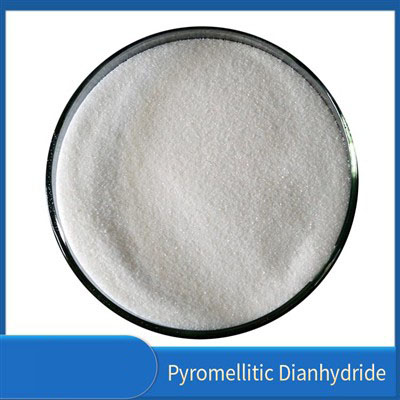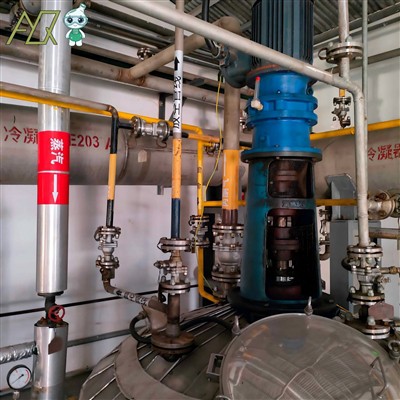

As a manufacturer of PMDA, a raw material for polyimides, I am keenly aware of the crucial role of thermal stability in the performance of polyimide materials. PMDA-based polyimides are widely used in high-tech fields such as aerospace, electronics, and automotive due to their excellent mechanical, chemical, and electrical properties. However, improving the thermal stability of PMDA-based polyimides has been a persistent challenge for researchers and manufacturers. In this blog post, I will share some effective strategies for enhancing the thermal stability of PMDA-based polyimides.
Understanding the Basics of PMDA - Based Polyimide
Before delving into the methods of enhancing thermal stability, it is essential to understand the structure and properties of PMDA - based polyimide. PMDA, with the chemical formula (C_{10}H_{2}O_{6}) and CAS number 89 - 32 - 7, is a key monomer in the synthesis of polyimide. You can find more information about PMDA 98% CAS 89 - 32 - 7. The reaction between PMDA and diamines forms polyamic acid, which is then converted into polyimide through a thermal imidization process. The rigid aromatic structure of PMDA contributes to the high - temperature resistance of the resulting polyimide. However, factors such as the type of diamine, the degree of imidization, and the presence of impurities can affect the thermal stability of the final product.
Strategies to Enhance Thermal Stability
1. Selection of Appropriate Diamines
The choice of diamine has a significant impact on the thermal stability of PMDA - based polyimide. Aromatic diamines, such as 4,4' - oxydianiline (ODA) and p - phenylenediamine (PDA), are commonly used due to their ability to form a highly conjugated and rigid molecular structure. These diamines can enhance the intermolecular forces and the overall thermal stability of the polyimide. For example, polyimide synthesized from PMDA and ODA has a high glass transition temperature ((T_{g})) and good thermal oxidative stability. The rigid aromatic rings in the diamine structure restrict the molecular motion, preventing the polymer chains from degrading at high temperatures.
2. Control of the Imidization Process
The imidization process is crucial for achieving high - quality polyimide with excellent thermal stability. The thermal imidization of polyamic acid to polyimide involves the removal of water molecules and the formation of imide rings. A well - controlled imidization process can ensure a high degree of imidization, which is essential for the thermal stability of the polyimide. Factors such as the heating rate, the maximum temperature, and the holding time during the imidization process need to be carefully optimized. Slow heating rates and appropriate holding times at high temperatures can promote complete imidization and reduce the formation of defects in the polymer structure.
3. Incorporation of Inorganic Fillers
Inorganic fillers can be incorporated into PMDA - based polyimide to enhance its thermal stability. Fillers such as silica ((SiO_{2})), alumina ((Al_{2}O_{3})), and carbon nanotubes (CNTs) can improve the thermal conductivity and mechanical properties of the polyimide. For instance, silica nanoparticles can act as a heat - conducting medium, dissipating heat more efficiently and reducing the temperature gradient within the polymer. Additionally, the interaction between the inorganic filler and the polymer matrix can restrict the molecular motion of the polymer chains, enhancing the thermal stability. However, the dispersion of the inorganic filler in the polymer matrix is a critical issue. Proper surface treatment of the filler and the use of appropriate dispersants are necessary to ensure uniform dispersion and good interfacial adhesion between the filler and the polymer.
4. Cross - Linking
Cross - linking is another effective way to enhance the thermal stability of PMDA - based polyimide. Cross - linking can be achieved through chemical reactions or irradiation. Chemical cross - linking agents, such as multifunctional amines or epoxides, can react with the polyimide chains to form a three - dimensional network structure. This network structure restricts the movement of the polymer chains and increases the thermal stability of the polyimide. Irradiation cross - linking, such as electron beam irradiation or gamma - ray irradiation, can also induce cross - linking in the polyimide. However, the cross - linking density needs to be carefully controlled to avoid excessive brittleness of the material.
5. Copolymerization
Copolymerization of PMDA with other monomers can also improve the thermal stability of polyimide. By introducing different monomers into the polymer chain, the molecular structure and properties of the polyimide can be modified. For example, copolymerizing PMDA with a monomer that has a high - temperature - resistant structure can enhance the overall thermal stability of the polyimide. Additionally, the copolymerization can also improve other properties such as solubility and processability.
Applications of High - Thermal - Stability PMDA - Based Polyimide
The enhanced thermal stability of PMDA - based polyimide makes it suitable for a wide range of applications. In the aerospace industry, polyimide materials with high thermal stability are used for manufacturing components such as engine parts, insulation materials, and structural composites. These components need to withstand high temperatures and harsh environments during flight. In the electronics industry, PMDA - based polyimide is used as a substrate material for flexible printed circuit boards (FPCBs) and as an insulating material for electronic devices. The high thermal stability ensures the reliable operation of the devices under high - temperature conditions.
Our Offerings as a PMDA Manufacturer
As a manufacturer of PMDA for Polyimide, we offer high - quality PMDA that meets the strict requirements of the polyimide industry. Our PMDA can be used not only for the synthesis of high - performance polyimide but also for other applications such as Pyromellitic Dianhydride Used For Phthalocyanine Blue Dye. We also provide 1,2,4,5 - benzene Tetracarboxylic Dianhydride, which is another name for PMDA, with different purity levels to meet the diverse needs of our customers.
Contact Us for Procurement
If you are interested in purchasing PMDA for your polyimide production or other applications, we are more than happy to assist you. We can provide you with detailed product information, technical support, and competitive pricing. Please feel free to contact us to start a procurement negotiation. We look forward to establishing a long - term and mutually beneficial partnership with you.
References
- Zhang, X., & Liu, Y. (2018). Thermal stability and mechanical properties of polyimide composites filled with inorganic nanoparticles. Polymer Composites, 39(6), 2137 - 2144.
- Wang, L., & Li, S. (2019). Synthesis and properties of high - performance polyimides based on pyromellitic dianhydride. Journal of Polymer Science Part A: Polymer Chemistry, 57(1), 12 - 20.
- Huang, Y., & Chen, Z. (2020). Cross - linking and thermal stability of polyimide materials. Progress in Polymer Science, 105, 101203.