
When it comes to the world of high - performance polymers, polyimides stand out as some of the most versatile and valuable materials. They find applications in a wide range of industries, from aerospace and electronics to automotive and microelectronics, thanks to their excellent thermal stability, mechanical strength, and chemical resistance. One of the key factors that determine the properties of polyimides is the choice of dianhydride used in their synthesis. In this blog, we'll explore the differences between polyimides made from pyromellitic dianhydride (PMDA) and those derived from other dianhydrides. As a trusted PMDA for Polyimide manufacturer, I have in - depth knowledge and experience in this field, and I'm excited to share this information.
Introduction to Polyimides and Dianhydrides
Polyimides are synthesized through a two - step process: first, the reaction of a dianhydride with a diamine to form a polyamic acid, followed by imidization to convert the polyamic acid into a polyimide. The dianhydride plays a crucial role in defining the structure and properties of the final polyimide. Different dianhydrides can lead to polyimides with distinct characteristics due to differences in their chemical structures, such as ring size, number of aromatic rings, and the presence of substituents.
PMDA - A Key Dianhydride
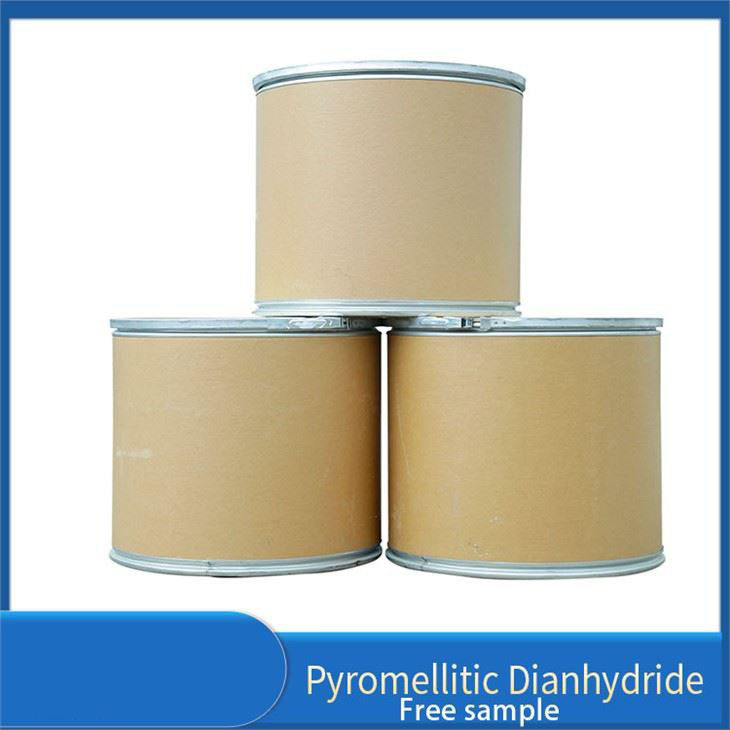
Pyromellitic Dianhydride 98% is a symmetrical aromatic dianhydride with a rigid structure. Chemically, it is also known as 1,2,4,5 - benzene Tetracarboxylic Dianhydride or Poly pyromellitic dianhydride. Its high symmetry and rigidity contribute to the formation of polyimides with excellent thermal and mechanical properties.
Thermal Properties
- High Thermal Stability: Polyimides made from PMDA generally exhibit very high glass - transition temperatures ($T_g$) and decomposition temperatures ($T_d$). The rigid structure of PMDA restricts the molecular motion of the polymer chains, making it difficult for them to undergo thermal degradation. For example, Kapton, a well - known polyimide made from PMDA and 4,4'-oxydianiline (ODA), has a $T_g$ of around 360°C and can maintain its mechanical properties at high temperatures for extended periods.
- Low Coefficient of Thermal Expansion (CTE): The high degree of chain alignment and intermolecular interactions in PMDA - based polyimides result in a low CTE. This property is highly desirable in applications where dimensional stability is crucial, such as in microelectronic devices and aerospace components.
Mechanical Properties
- High Tensile Strength and Modulus: PMDA - derived polyimides typically have high tensile strength and modulus due to the strong intermolecular forces and the rigid backbone structure. These polymers can withstand high mechanical stresses and are often used in engineering applications where load - bearing capabilities are required.
- Good Flexural Properties: The polymers also exhibit good flexural strength, which allows them to be used in applications where bending and flexing are involved, such as in flexible printed circuits.
Polyimides from Other Dianhydrides
There are many other dianhydrides available for polyimide synthesis, and each imparts unique properties to the resulting polymers.
3,3',4,4' - Biphenyltetracarboxylic Dianhydride (BPDA)
- Thermal Properties: BPDA - based polyimides also have high thermal stability, but their $T_g$ and $T_d$ values are often different from those of PMDA - based polyimides. In some cases, BPDA - polyimides can have slightly lower $T_g$ values, which can provide better processability while still maintaining good thermal resistance.
- Mechanical Properties: These polyimides generally have good mechanical strength, but their flexibility can be different from PMDA - polyimides. The presence of the biphenyl group in BPDA can introduce some kink into the polymer chain, which may affect the overall mechanical behavior.
4,4' - Oxydiphthalic Anhydride (ODPA)
- Thermal Properties: ODPA - based polyimides have relatively lower thermal stability compared to PMDA - polyimides. The oxygen atom in the ODPA structure disrupts the conjugation of the aromatic rings to some extent, reducing the rigidity of the polymer backbone and thus lowering the $T_g$ and $T_d$ values.
- Mechanical Properties: They tend to be more flexible than PMDA - polyimides. The ether linkage in ODPA allows for greater chain mobility, resulting in a polymer with better flexibility, which is useful in applications such as flexible films.
Solubility and Processability
One of the challenges in using PMDA - based polyimides is their limited solubility. The high degree of conjugation and intermolecular interactions in PMDA - polyimides make them insoluble in most common organic solvents, except for some highly polar aprotic solvents such as N - methyl - 2 - pyrrolidone (NMP) and dimethylformamide (DMF). This can restrict the processing methods available for these polymers.
On the other hand, polyimides made from some other dianhydrides, such as ODPA - based polyimides, can have better solubility. The presence of the ether linkage in ODPA increases the polarity of the polymer and disrupts the intermolecular packing, making it more soluble in a wider range of solvents. This improved solubility can greatly simplify the processing of the polymer, enabling techniques such as solution casting and spin - coating.
Chemical Resistance
PMDA - based polyimides are known for their excellent chemical resistance. The rigid and highly cross - linked structure of these polymers makes them resistant to a wide range of chemicals, including acids, bases, and organic solvents. This property is essential in applications where the polymer will be exposed to harsh chemical environments, such as in chemical processing plants and in some electronic devices.
Polyimides from other dianhydrides may have different levels of chemical resistance depending on their chemical structures. For example, polyimides with more flexible or less cross - linked structures may be more susceptible to chemical attack.
Applications
- PMDA - Based Polyimides: Due to their high thermal and mechanical properties, PMDA - based polyimides are widely used in aerospace applications, such as in the manufacture of structural components, insulation materials, and electronic packaging. In the electronics industry, they are used in flexible printed circuits, semiconductor passivation layers, and as dielectric materials in microelectronics.
- Polyimides from Other Dianhydrides: BPDA - based polyimides are often used in applications where a balance between processability and performance is required, such as in some high - performance films and membranes. ODPA - based polyimides are popular in applications that require flexibility, such as in flexible displays and wearable electronics.
Conclusion
In conclusion, the choice of dianhydride significantly affects the properties of polyimides. PMDA - based polyimides offer excellent thermal stability, high mechanical strength, and good chemical resistance, making them suitable for high - performance applications. However, their limited solubility can pose challenges in processing. Polyimides made from other dianhydrides can provide different combinations of properties, such as better processability, flexibility, or specific levels of thermal and mechanical performance.
If you're in the market for high - quality PMDA for polyimide synthesis, I'm here to help. As a leading PMDA manufacturer, we offer top - notch products that can meet your specific requirements. Whether you're working on a small - scale research project or a large - scale industrial application, our PMDA can be the key to achieving the desired polyimide properties. Don't hesitate to reach out for more information and to discuss your procurement needs.
References
- Morgan, P. W. (1965). Condensation polymers: by interfacial and solution methods. Interscience Publishers.
- Wilson, D., Stenzenberger, H. D., & Hergenrother, P. M. (Eds.). (1990). Polyimides: fundamentals and applications. Chapman & Hall.
- Ghosh, M. K., & Mittal, K. L. (Eds.). (1996). Polyimides and other high temperature polymers: synthesis, characterization, and applications. Nova Science Publishers.